1. Dal Lake – Dal Lake, located in Srinagar, Jammu and Kashmir, is one of India’s most beautiful and iconic lakes. Known as the “Jewel of Kashmir,” it is surrounded by majestic mountains and lush gardens. The lake is famous for its houseboats, shikaras, and floating markets, which offer a unique travel experience. During sunrise and sunset, the shimmering waters create breathtaking views. Dal Lake also supports local livelihoods through fishing and tourism. In winter, parts of the lake freeze, adding to its charm. Visitors enjoy peaceful rides, photography, and exploring traditional Kashmiri handicrafts sold on the water. Dal Lake truly reflects Kashmir’s serene beauty.
2. Nishat Bagh – Nishat Bagh is one of the most beautiful Mughal gardens located on the eastern side of Dal Lake in Srinagar, Jammu and Kashmir. Built by Asif Khan in 1633, it is also known as the “Garden of Joy.” The garden is designed in a terraced style with lush lawns, blooming flowers, and flowing fountains. The backdrop of the Zabarwan Mountains adds to its scenic charm. Nishat Bagh reflects typical Mughal architecture, featuring symmetrical layouts and water channels. Visitors can enjoy panoramic views of Dal Lake, making it a popular spot for relaxation, photography, and witnessing Kashmir’s natural beauty.
3. Shalimar Bagh and Mughal Garden – Shalimar Bagh in Srinagar is one of the finest examples of Mughal garden architecture. Built by Emperor Jahangir in 1619 for his wife Nur Jahan, it reflects the grandeur of Mughal landscaping. The garden is laid out in terraces, with flowing water channels, fountains, and lush lawns. Beautiful chinar trees add charm to the surroundings. Mughal Garden style emphasizes symmetry, Persian layout, and natural beauty. The combination of water, greenery, and architecture makes Shalimar Bagh a peaceful retreat. It remains a famous tourist attraction in Kashmir, symbolizing royal elegance and artistic design inspired by nature and Persian garden traditions.
4. Nigeen Lake – Nigeen Lake, located near Srinagar in Jammu and Kashmir, is a serene and picturesque water body connected to the famous Dal Lake. Surrounded by willow and poplar trees, it is often referred to as the “jewel in the ring” for its calm environment. Unlike the more crowded Dal Lake, Nigeen offers peace, clear waters, and beautiful houseboat stays. The lake is ideal for shikara rides, photography, and relaxation amid nature. Its surroundings include charming villages and scenic views of the Zabarwan Mountains. Nigeen Lake is a perfect getaway for travelers seeking tranquility away from busy tourist spots.
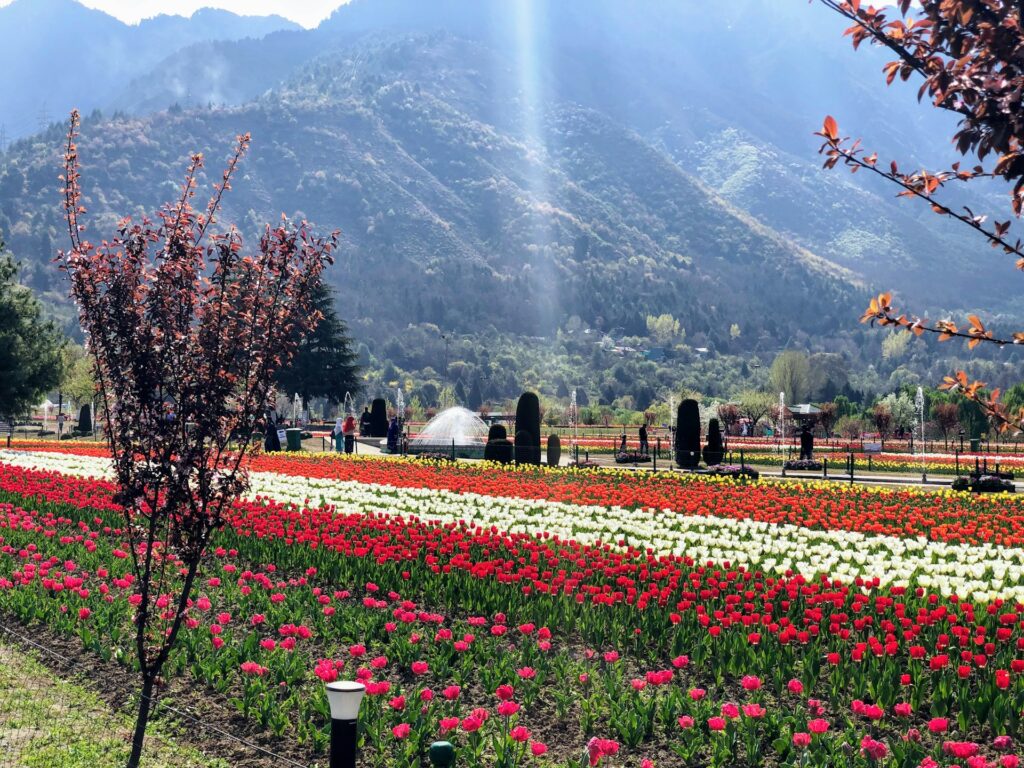
5. Indira Gandhi Memorial Tulip Garden – Indira Gandhi Memorial Tulip Garden, located at the foothills of the Zabarwan Range in Srinagar, is Asia’s largest tulip garden. Overlooking the beautiful Dal Lake, it is spread across terraced slopes, creating a stunning landscape during spring. The garden blooms with more than a million tulips of different colours and varieties, offering a breathtaking view. Apart from tulips, it also features daffodils, hyacinths, and ranunculus. The annual Tulip Festival attracts thousands of visitors, celebrating the valley’s springtime charm with cultural events and local handicrafts. The garden not only boosts tourism in Kashmir but also reflects the natural beauty of the region.
6. Chashme Shahi – Chashme Shahi, also known as the Royal Spring, is one of the most beautiful and historic gardens in Srinagar, Jammu and Kashmir. Built in 1632 during the Mughal era by Ali Mardan Khan under the orders of Mughal Emperor Shah Jahan, it is famous for its natural spring that flows through the terraces. The garden is divided into three levels with flowing water channels, fountains, and lush greenery. Visitors are attracted to its serene atmosphere, scenic views of Dal Lake, and refreshing spring water. Chashme Shahi remains a popular tourist spot showcasing Mughal architecture, landscaped lawns, and peaceful surroundings.
7. Aru Valley – Aru Valley, located near Pahalgam in Jammu and Kashmir, is a peaceful and scenic destination known for its lush meadows, dense forests, and snow-covered peaks. Situated along the Lidder River, the valley serves as a base for trekking routes to Kolahoi Glacier and Tarsar-Marsar lakes. Its cool climate, charming wooden huts, and green landscapes attract nature lovers and photographers. The valley offers activities like horse riding, camping, and fishing, making it ideal for adventure seekers. During winter, Aru Valley turns into a snowy wonderland, offering skiing opportunities. Its untouched beauty provides a refreshing escape from busy city life.
8. Hari Parbat – Hari Parbat is a historic hill located in Srinagar, Jammu and Kashmir. It holds great religious and cultural significance, featuring a fort built by Mughal emperor Akbar in the 16th century. The hill is a sacred site for Hindus, Sikhs, and Muslims, housing important shrines like the Sharika Devi Temple, a Hindu goddess temple, and a Sikh Gurudwara. The Hari Parbat Fort offers panoramic views of Srinagar and Dal Lake, attracting many visitors and pilgrims. The site symbolizes harmony among different religions and reflects the rich heritage of Kashmir, making it a notable landmark in the region.
9. Jamia Masjid – Jamia Masjid, located in Srinagar, Kashmir, is one of the most iconic and historic mosques in India. Built in the 14th century by Sultan Sikandar, it is renowned for its stunning Indo-Saracenic architecture with intricate wooden carvings and a large courtyard that can accommodate thousands of worshippers. The mosque features four majestic wooden minarets and a beautiful central prayer hall. It has been a center of religious and cultural gatherings for centuries. Jamia Masjid holds great significance for Muslims in the region and is a symbol of Kashmir’s rich heritage and spiritual tradition.
10. Zero Bridge – Zero Bridge is a historic wooden bridge located in Srinagar, Jammu and Kashmir, India. Built during the 1950s, it spans the Jhelum River, connecting the old city with the newer parts of Srinagar. The bridge is unique for its wooden construction, unlike modern concrete bridges, giving it a traditional charm. It serves as an important pedestrian and local traffic route, symbolizing the cultural heritage of the region. Zero Bridge holds significant historical value and is a popular spot for locals and tourists alike to enjoy scenic views of the river and surrounding areas. It remains a vital link in Srinagar’s urban landscape.
11. Pathar Mosque – Pathar Mosque, located in Srinagar, Jammu and Kashmir, is a remarkable example of Mughal-era architecture. Built during the reign of Emperor Shah Jahan in the 17th century, this mosque is made entirely of stone, which is unique compared to other mosques in the region. Its name “Pathar” means stone in Urdu, reflecting its sturdy construction. The mosque features exquisite carved stonework and arches, showcasing intricate craftsmanship. Although smaller in size, it holds great historical and cultural significance. Pathar Mosque remains a peaceful place of worship and a popular site for visitors interested in Kashmir’s rich heritage.
12. Dastgeer Sahib – Dastgeer Sahib is a revered shrine located in Srinagar, Jammu and Kashmir. It is dedicated to Sheikh Abdul Qadir Jilani, a prominent Sufi saint known for his teachings of love, peace, and spiritual wisdom. The shrine is visited by thousands of devotees every year who seek blessings and spiritual solace. Known for its beautiful architecture, the shrine houses the relics of the saint, making it a significant spiritual and cultural landmark in Kashmir. Dastgeer Sahib represents the rich Sufi heritage of the region and continues to be a symbol of faith, unity, and devotion for people from diverse backgrounds.
13. Pari Mahal – Pari Mahal, also known as the Palace of Fairies, is a historic monument located in Srinagar, Jammu and Kashmir. Built in the 17th century by Dara Shikoh, the eldest son of Mughal Emperor Shah Jahan, it served as a beautiful terraced garden and a center for learning and meditation. The architecture reflects a blend of Mughal and Persian styles, surrounded by lush greenery and offering panoramic views of Dal Lake and the Kashmir valley. Pari Mahal is renowned for its serene ambiance, making it a popular spot for tourists and history enthusiasts seeking to explore Kashmir’s rich cultural heritage.
14. Char Chinar – Char Chinar is a famous landmark located on an island in the middle of Dal Lake, Srinagar, Kashmir. The name means “Four Chinar Trees,” referring to the four majestic Chinar trees that grow on the island. These trees are centuries old and symbolize the natural beauty and cultural heritage of Kashmir. The island offers a peaceful retreat and is a popular spot for tourists and locals alike. Surrounded by the serene waters of Dal Lake and framed by the stunning Himalayan backdrop, Char Chinar is often visited for its scenic views and tranquil atmosphere, making it an iconic symbol of Kashmir’s charm.
15. Mughal Gardens – Mughal Gardens are a beautiful blend of Persian and Indian garden styles, created during the Mughal Empire in India. These gardens are known for their symmetrical layouts, flowing water channels, fountains, and terraces, symbolizing paradise on earth. Famous examples include Shalimar Bagh and Nishat Bagh in Kashmir, and the gardens around the Taj Mahal in Agra. Mughal Gardens reflect the Mughals’ love for nature and aesthetics, combining greenery, flowers, and water to create peaceful, serene environments. They remain important cultural and historical landmarks, attracting tourists worldwide with their timeless beauty and architectural brilliance.
16. Hazratbal Shrine – Hazratbal Shrine, located in Srinagar, Kashmir, is a revered Muslim shrine famous for housing a relic believed to be a hair of the Prophet Muhammad. It holds immense religious significance for Muslims in the region and beyond. The shrine’s pristine white marble structure sits beautifully on the banks of Dal Lake, offering a serene atmosphere for devotees and visitors. Known as “Dargah Sharif,” it attracts thousands during special occasions, especially the annual Urs festival. The Hazratbal Shrine symbolizes faith, peace, and spiritual heritage in Kashmir, making it a prominent pilgrimage site and cultural landmark in India.


0 Comments